
By Eric L Johnson
We have been flooded with scientific information over the past few decades. What a gift! But many agree that one of the most significant contributions to human understanding during this time has been the result of advances in brain-scan technology. We realize today that everything we experience in life is mysteriously related to neural activity in the brain, and while there are limits to how small the region of neural activation is for us to detect its activity, we have acquired massive amounts of information about brain activity and its relation to human life, for which I am very thankful!
However, a significant outcome of this body of research has been the discovery of a free, comparatively much simpler, and more portable brain-scan system that is ultimately far more important to us than all the fMRI machines in the world: our bodies. For our bodies are constantly sending us information about what’s going on in our brains.
Put a little differently, our bodies are meaningful; they are filled with meaning, and they convey meaning – the body keeps the score, in part, because we feel our experiences, and what they mean, in our bodies – and our brains are simultaneously processing that bodily experience (mostly in the right hemisphere), and if it’s of sufficient intensity (but not too much), we can store that experience, and it can be retrieved years later and give us the same felt experience that we had decades ago. As a result, we can learn a fair amount about ourselves and our stories if we try to pay attention to what’s going on in our bodies. If those who are interested, the sense we have of what’s going on in the body is called interoception.
So, I have to ask, what are you aware of is going on in your body right now? Are you feeling tense? Do you have a headache? Are there “butterflies” in your stomach? Or are you calm and relaxed and feeling pretty good about your life in the world? The central nervous system (the brain and spinal cord) and the peripheral nervous systems are constantly interacting with each other, providing information about the worlds around us and within, and the peripheral nervous system, spread throughout our body, can be divided into two parts, the somatic nervous system, which we can consciously control, like our muscles, and the autonomic nervous system, which is also split into two parts, the sympathetic nervous system (activated, when we’re threatened or stressed, for so-called “fight-or-flight”), and the parasympathetic (the soothing, calming system, used for “rest-and-digest”) that together give us much of our felt experience in life. Indeed, the French Catholic philosopher, Michel Henry, defined life as that which feels itself being alive.
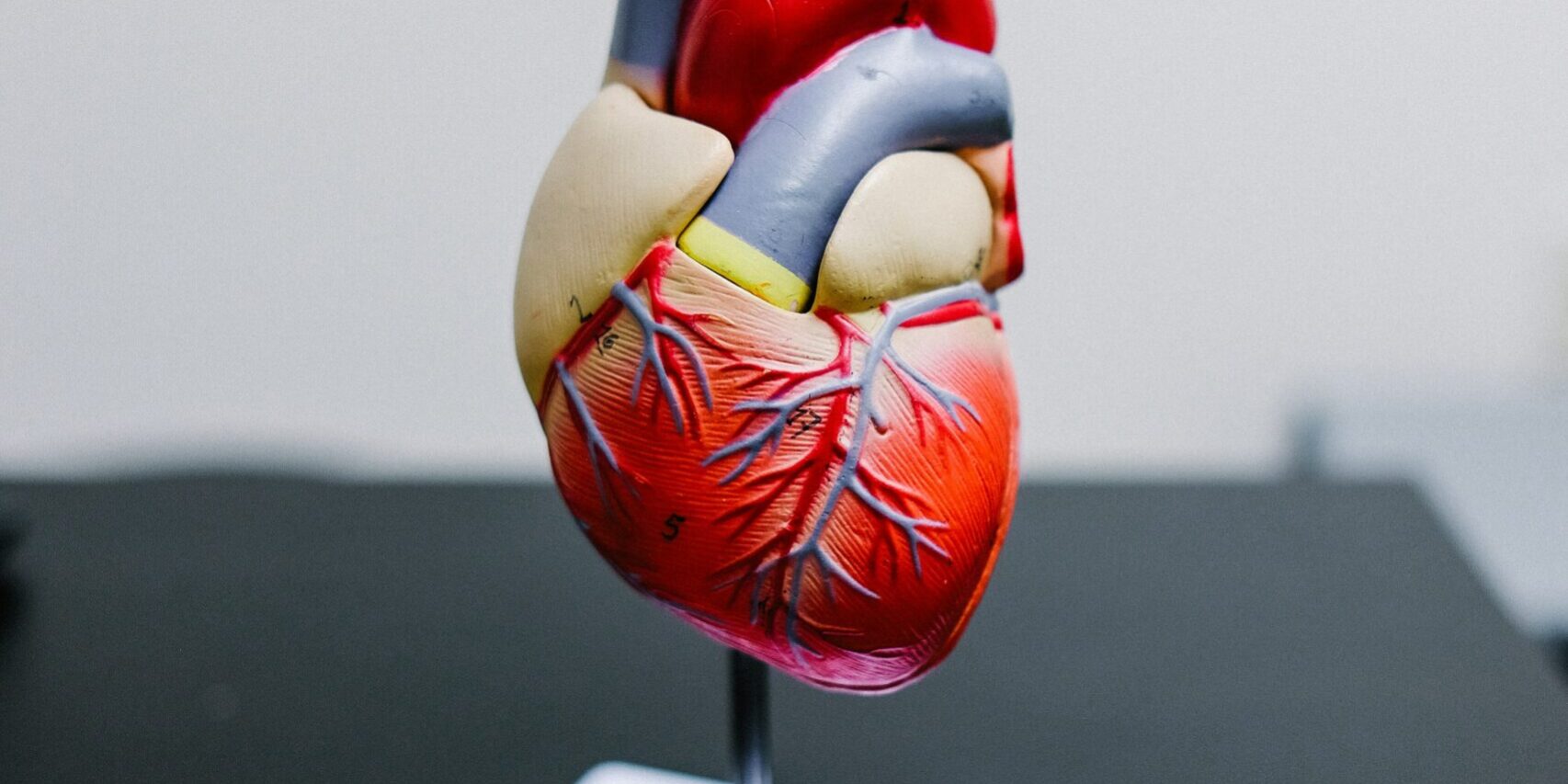
Emotions, then, are signs of life, and they are meaningful. Positive (pleasant) emotions signify what we perceive will promote our life and wellbeing and are good for us, and negative (unpleasant) emotions signify what we perceive will undermine our life and wellbeing and are bad for us. These emotions manifest themselves in our bodies (affecting our muscles and digestion), especially in the torso – from deep in our gut up into our chest, the region we call, metaphorically, the heart.
According to Hans Wolff, a noted 20th-century, Old Testament theologian, the heart is the most significant psychological term in the Old Testament, occurring over 1000 times in the two Testaments together. As a result, the European languages have many idioms that use “heart” to refer to our emotions (or their absence). Consider the following: “My heart’s not in it;” “You look heartbroken;” “She has a soft heart;’ and “He wears his heart on his sleeve.” In addition, English also has idioms to refer to virtue and virtuous character: “He has a big heart;” Your heart is in the right place;” “She’s a cold-hearted woman;” “Please speak what’s on your heart.” But these related usages would seem to be universal. Mandarin (in China), Yoruba (in Nigeria), and Hindi (in India) completely independently also use their word for heart metaphorically to refer to emotions and virtues.
Why is that?
Because humans were created with the capacity – implanted in their bodies, mostly in their torso – to feel their emotions. People who break their neck, and lose all sensation in their bodies, can no longer feel their emotions.
The heart is central to a biblical psychology, because it’s the primary bodily site of our emotional experience, and our emotions become the experiential basis for the development of virtues and moral character. (See the work of Robert Roberts on this score.)
Tragically, most people exposed to serious trauma in childhood have lost some of their interoceptive capacity. The parents’ behavior trained them to focus their attention far more on the parents’ thoughts, behaviors, and emotions than what was going on inside of themselves, and their brains got organized accordingly, and over time, they gradually “lost touch” with what was going on inside themselves, and their emotion-system became disordered, as a result. Consequently, they grow up having difficulties utilizing their personal brain-scan capacity and properly interpreting the meaning of their own bodily signals, and those of others, and this has immeasurably complicated their lives – their self-understanding and their relationships, and yes, even their morality.
A big part of the problem is that in the modern era, the cognitive-system became vastly more important, comparatively, than the emotion-system. After all, our minds have made so many important scientific discoveries (like brain-scan technology)! But modernity – including most of its psychology – has fostered a massive disconnect between the head and the heart, so, from early childhood onwards, we’re rewarded for neglecting our hearts, and we consider ourselves the more virtuous for doing so. But this is not the way it’s supposed to be.
God created us as body/soul unities, and we function best when our minds and our hearts are working together in harmony. Let us become more skilled, then, in interoception and more adept in using the remarkable brain-scan system God has given us to get to know ourselves, God, and others better, to empathize better, and to attune better to the meaning that is constantly being conveyed to us in our present emotional experience, as well as in the emotion memories we stored in childhood (or didn’t). Our Christian flourishing depends on it.
This is part 1 of 3 for this series.

Eric founded the Christian Psychology Institute a decade ago while serving in Christian higher education. Since retiring from Houston Christian University in May 2024, he has devoted himself to building CPI into a national hub for training, scholarship, and certification in Christ-Centered Therapy.
An accomplished author and editor, Eric is widely respected for his work at the intersection of theology and psychology. He brings over 25 years of pastoral counseling experience and is a frequent speaker at conferences and academic events.
Eric is married to Rebekah and cherishes time with their two children and three grandchildren. In his free time, he enjoys hiking and bike riding.