

By Charles Hackney, PhD
When I was in Junior High, I did something bad. This was not an understandable error in judgment, or a moment of weakness, or a “victimless” self-indulgence. This was an action that was low, treacherous, and mean. When I think about that day, I can only snarl “you contemptible slime” at my younger self.
I can never forgive myself for what I did. I mean that literally, because in this post I will argue that we misuse the word “forgive” when we apply it to ourselves.
Self-forgiveness is a concept that has become ubiquitous in our society, being found in self-help books, devotional literature, and social emotional learning curricula for use in schools. The message of self-forgiveness is presented in our entertainment media as well, with one particularly-extreme example being the award-winning comedy/drama television show Lucifer, in which Satan learns that the true path to salvation (and averting the destruction of Earth) is to learn to forgive himself (Season 4, Episodes 9-10).
Forgiveness being a thoroughly-Christian concept, many Christian psychologists have carried out admirable work bringing forgiveness to center-stage in our understanding of healthy relational and emotional functioning. Perhaps the leading figure in forgiveness research and practice is Everett Worthington, whose autobiographical chapter in the excellent book Integrating Faith and Psychology: Twelve Psychologists Tell Their Stories gives us his tale of God’s guidance, leading him from serving as a nuclear engineer in the US Navy to becoming one of the world’s foremost experts in the psychology of forgiveness.
Worthington defines forgiveness as a two-step process. In Step One (decisional forgiveness), we choose to view the one who has done evil as a person of value, and we forswear vengeance. In Step Two (emotional forgiveness), we replace our negative emotions toward the perpetrator with positive emotions (Worthington & Sandage, 2016). This is done through a process that Worthington calls REACH (summarized at his website here). Worthington goes on to describe how these steps can be applied to the self, empowering us to accept ourselves as flawed, overcome guilt, resolve emotional distress, and learn to do better next time.
However, as I have argued elsewhere, this approach may involve a theological misunderstanding of forgiveness as shown to us in the Bible. As several theologians and biblical scholars have pointed out (e.g., Bash, 2007; Gowan, 2010; Volff, 2019), the purpose of forgiveness is not the emotional well-being of the forgiver, and the point of forgiveness is not an inner change in one’s attitude toward the perpetrator. Forgiveness in the Bible is grounded in the process of reconciliation, restoring the interpersonal relationship that was disrupted by the evil act. Forgiveness is an act of self-giving love on the part of the victim toward the perpetrator, which creates an inherent inconsistency in the idea that the perpetrator might offer himself a gift, one that is rightfully the victim’s to give, in a self-sacrificial act of self-love. So when I say that I cannot forgive myself for my sinful actions in Junior High, that is because it is not my place to offer myself forgiveness; that belongs to God, and to the person whom I betrayed and hurt.
Of all the positions that I have taken as a Christian psychologist, this is the one that has resulted in the most hard feelings among my colleagues, as if criticizing what I believe to be theological errors in popular approaches to forgiveness means that I am mean-spirited, or against forgiveness in general. On the contrary, I affirm the life-transforming power of forgiveness, and that is why I oppose misconceptions of what forgiveness is and how forgiveness works. As psychologists, we strive for a true understanding of the human condition, because misunderstanding humanity—even if the misunderstandings are well-intentioned—leads to negative outcomes.
Tangney and colleagues (2005), summarizing the empirical research on dispositional self-forgiveness, question the therapeutic value of self-forgiveness by saying that those who are the most willing to forgive themselves “appear to be rather self centered, insensitive, narcissistic individuals, who come up short in the moral emotional domain, showing lower levels of shame, guilt, and empathic responsiveness”. Christian counselors, however, are not left without any resources for working with clients who struggle with unhealthy guilt or self-loathing. There are many theoretical approaches and therapeutic practices that involve acceptance of past misdeeds, restructuring of unreasonable beliefs about moral standards, resolution of past conflicts, and so on.
I cannot forgive myself. But I can accept that I have done wrong, without obsessing over it. I can accept God’s offer of forgiveness, and resolve to do better in the future, God helping me.
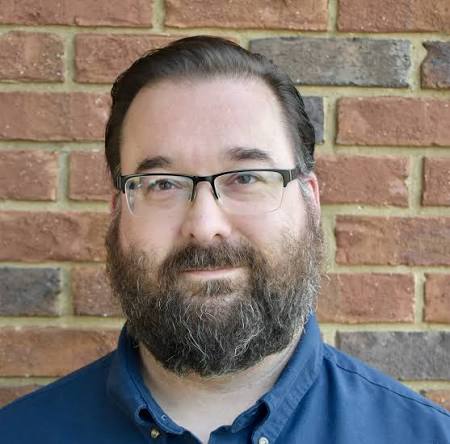
Charles Hackney completed his PhD in Social and Personality Psychology at the University at Albany, SUNY. He currently serves as Chair of the Psychology Department at Briercrest College, where his scholarly interests include the positive psychology movement, terror management theory, and the relationship between psychology and Christianity. He is the author of Positive Psychology in Christian Perspective (2021, IVP Academic). Learn more about Charles at his faculty website and his Substack.