
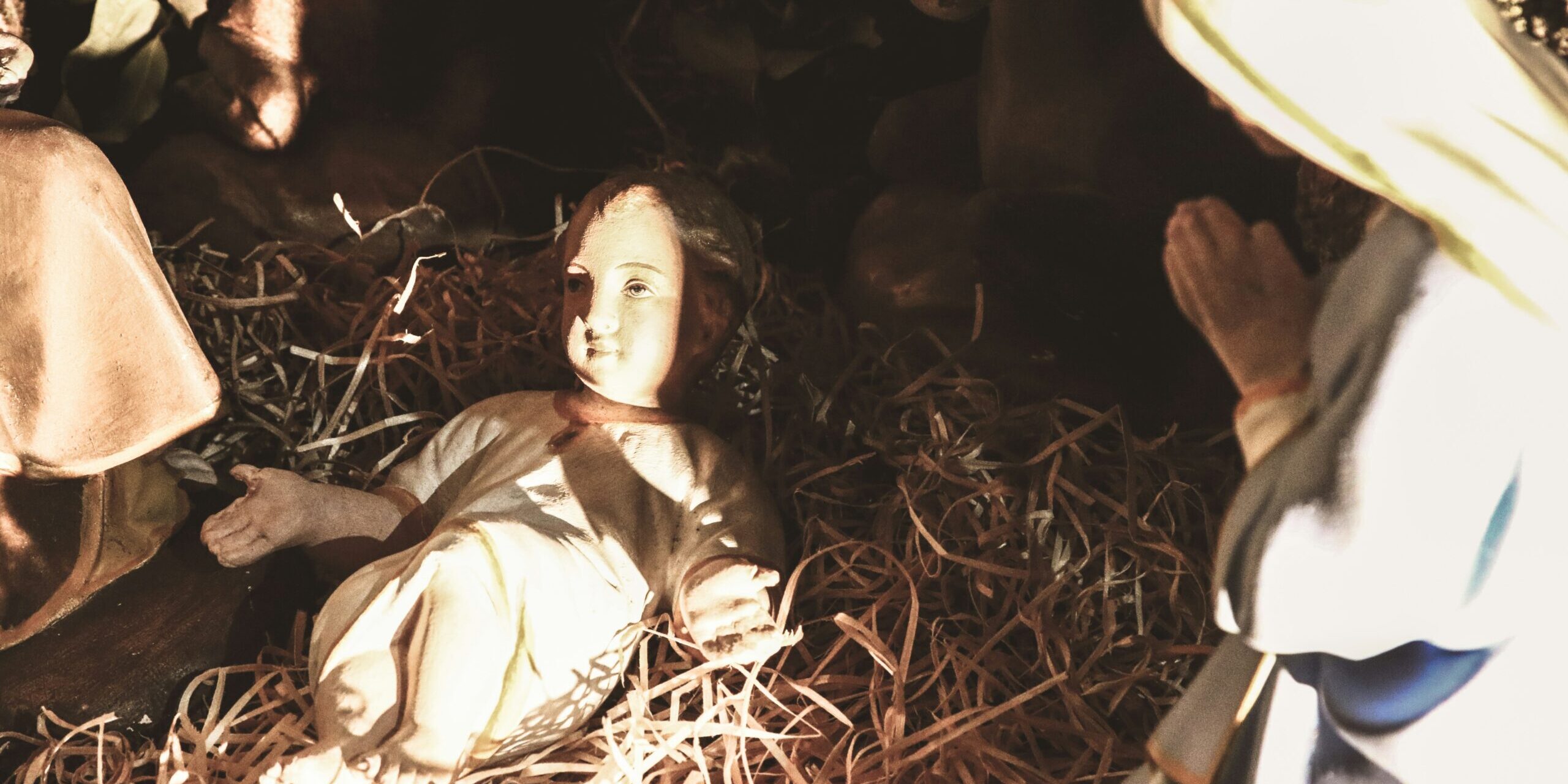
18 This is how the birth of Jesus the Messiah came about: His mother Mary was pledged to be married to Joseph, but before they came together, she was found to be pregnant through the Holy Spirit. 19 Because Joseph her husband was faithful to the law, and yet did not want to expose her to public disgrace, he had in mind to divorce her quietly.
20 But after he had considered this, an angel of the Lord appeared to him in a dream and said, “Joseph son of David, do not be afraid to take Mary home as your wife, because what is conceived in her is from the Holy Spirit. 21 She will give birth to a son, and you are to give him the name Jesus, because he will save his people from their sins.”
22 All this took place to fulfill what the Lord had said through the prophet: 23 “The virgin will conceive and give birth to a son, and they will call him Immanuel” (which means “God with us”).
24 When Joseph woke up, he did what the angel of the Lord had commanded him and took Mary home as his wife. 25 But he did not consummate their marriage until she gave birth to a son. And he gave him the name Jesus.
Matt. 1:18-25 NIV
Introduction
During the Christmas season we always hear the truth about God with us. But what does it mean for us? Take some time to reflect on it and let it wash over you this Christmas season.
Emmanuel – “God with us” – is more than a doctrinal statement or a nostalgic Christmas phrase. It’s an invitation to experience the living reality of God’s presence in your daily life, in your struggles, in your body, and in your heart. When the Word became flesh and dwelt among us, God demonstrated that He doesn’t stand at a distance from our human experience. He enters into it fully – with compassion, comfort, and an abiding peace that can steady us even in life’s most turbulent moments.
This reflection exercise invites you to slow down and explore how these theological truths are not just concepts to believe, but realities to experience. The following questions encourage you to notice not only what you think about God’s presence, but how you experience it in your emotions, your body, and your relationships.
Instructions for Reflection
Create space: Find a quiet place where you won’t be interrupted for 20-30 minutes. Consider having a journal nearby to capture your thoughts.
Be honest: There are no “right” answers here. God welcomes your authentic response – including doubt, resistance, longing, or confusion.
Engage your whole self: These questions invite you to notice not just your thoughts, but your feelings, bodily sensations, memories, and patterns. Pay attention to what arises without judgment.
Take your time: You don’t need to answer all five questions in one sitting. Some questions may require days or weeks of pondering. Let the Spirit guide your pace.
Invite God in: Before you begin, take a few deep breaths and ask God to meet you in this process. He is present with you even now as you reflect.
Questions for Reflection
1. When you think about “God with us” – Emmanuel – can you recall a specific moment recently when you sensed God’s presence in a tangible way? What was happening in your body when you experienced that – your breathing, your posture, the tension you were holding? How did that awareness of His presence affect both your emotional state and your physical sensations?
2. In what areas of your life right now do you most need to experience His nearness? I’m also curious – when you think about letting God be close to those vulnerable places, what emotions or even resistance comes up for you?
3. We know anxiety often lives in the body as much as the mind. When you’ve experienced God’s peace, what shifted in your nervous system? Did you notice a change in your thought patterns, your ability to be present, or your capacity to self-regulate?
4. When you’ve experienced seasons of suffering or difficulty, how have you seen God comfort you? And here’s a deeper layer – how does receiving comfort feel for you? Some of us learned early that we had to be our own comforters, and accepting care (even from God) can actually trigger grief or vulnerability we’ve been avoiding.
5. From both a spiritual and mental health perspective, how would you distinguish between the temporary dopamine hit of pleasure, the circumstantial nature of happiness, and the deeper, more sustainable joy that comes from God? When have you experienced joy even in difficult circumstances, and what does that teach you about resilience, meaning-making, and where you find your identity?