
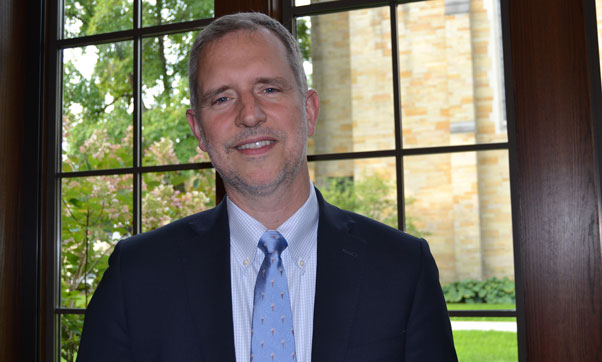
Russell Kosits

Russell Kosits

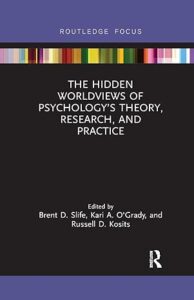
Dr. Russell D. Kosits is a prominent figure in Christian psychology and the history and theory of psychology, specializing in the complex relationship between psychology and Christian faith. He previously served for 17 years as an Associate Professor and Chair of the Psychology Department at Redeemer University College in Ancaster, Ontario, before joining Grove City College as a Professor of Psychology. He has a master’s degree in professional psychology from Geneva College and master’s and doctoral degrees in psychology from the University of New Hampshire, where his dissertation explored the erosion of the concept of “will” in American psychology. Dr. Kosits is known for advocating that the Christian worldview provides a superior framework for understanding psychological science than prevailing naturalistic worldviews and has authored work, such as The Hidden Worldviews of Psychology’s Theory, Research, and Practice, which critiques the notion of worldview-neutrality in the discipline.
Publications

Books

Articles

  • Deeply Engaged and Strongly Perspectival? The Impasse in the Psychology-Christianity Dialogue and Its Missional Resolution. (Article in Perspectives on Science and Christian Faith, 2013). This explores the challenge of producing explicitly Christian scholarship that is still relevant to mainstream psychological audiences.
  • Christian Theology and Positive Psychology: An Exchange of Gifts (Co-authored with Ellen T. Charry, 2017). This discusses the potential for mutual benefit and conflict between Christian theological concepts and the field of positive psychology.
  • Whose Psychology? Which Christianity? (Article in McMaster Journal of Theology and Ministry, 2011–2012). This is a review and analysis of the different viewpoints on the integration of psychology and Christianity.
  • Of Faculties, Fallacies, and Freedom: Dilemma and Irony in the Secularization of American Psychology (Article in the Journal of the History of the Behavioral Sciences, 2004). This explores the historical secularization of psychology.
  • The Separation of Psychology and Theology at Princeton, 1868–1903: The Intellectual Achievement of James McCosh and James Mark Baldwin (Book Review in the Journal of the History of the Behavioral Sciences, 2007).