

By Benjamin Andrews
The most important lesson I was taught about therapy came on my first day of graduate school: “Trust the process.” The most important lesson I’ve learned as a Christian Psychologist has been hard-earned through a decade of practice, learning from mistakes, and growth: “Trust God’s process.” This month, we’ve been reflecting on spiritual formation and its value for therapeutic healing. In continuation of that theme, I will be sharing a true, de-identified1 story of a man whose unexpected encounters with God in spiritual formation changed everything in therapy.
Several years ago, a man was well and truly “stuck” in therapy, and things only got darker when the COVID-19 shutdown began. Ironically, he was a mental health professional himself, and he was, in his own words and professional opinion, among the most hopeless cases he had ever known. Like many during COVID, he began working remotely, but he became so depressed that even that became unmanageable. Recognizing that he was now quite impaired, he decided to cut his caseload by half and temporarily go to live with his parents. Ruminating as he drove mile after mile, his mind turned itself over and over, recycling self-loathing and self-pity for all his failures: a lost relationship, a worsening addiction, now the added inability to do his work, and being an adult moving back to his parents…. And somewhere during the nine-hour drive to his parents’ home, his despair crystallized into a vivid, certain, hateful realization: He would shoot himself, and he knew where. It was only a matter of time.
To be fair to his perspective, the situation was truly bleak. He had a history of recurrent mental illness including depression, anxiety, and obsessive-compulsive disorder, all of which stemmed from intense perfectionism and an anxious-avoidant attachment style. He had medicated his loneliness and pain through 25 years of two addictions, and he was sober from neither. Both his addictive history and mental illnesses shared genetic predispositions, and they began relatively early in life, which is predictive of more chronic difficulties. Gold-standard psychological assessments suggested a poor prognosis, highlighting paradoxical and contradictory motivations and likely a combination of personality problems. And, as a mental health professional, he knew all this and understood what it meant: He was broken, chronically disordered, unlikely to recover.
Further, the real-life evidence for his hopelessness seemed insurmountable. He had spent five years in therapy with three different specialists. All three were experienced licensed mental health professionals, had additional training and credentials in addictions, enjoyed good professional reputations, and integrated faith into their practice. But after five years, he was getting worse, not better. He had seen a faith-based Psychiatrist and taken medication. However, it utterly failed to stave off the addiction, and symptom reduction was a far cry from remission of depression and anxiety. At one point, he took a medication that severely impeded his ability to relapse and moved into a living room for constant observation, but he would then spend hours on efforts to relapse (sometimes successfully, sometimes not), ever careful to hide his failures from others. Throughout the twelve years prior to his desperate suicidality, he also continuously tried prayer, confession, accountability groups, memorizing Scripture, and studying theology and the depths of Scripture (going so far as to take years of coursework in Greek, Hebrew, theology, and Biblical studies). None of this knowledge made more than a hint of lasting difference; each new idea or discovery promised hope but rarely outlasted the next craving. In desperation, he had even sought charismatic deliverance from spiritual strongholds and demonic powers, but deliverance also proved elusive. On occasion, he had a genuine, profound encounter with God – but after leaving the mountaintop, he always fell back into the valley. Failing all else, he had also tried 12-step programs three different times, and he had failed every time. Years of 12-step work left him with a personal best of three weeks’ sobriety and the deep shame of another label: “chronic slipper.”2 After a decade of nearly constant effort (trying various combinations of biological, psychological, social, and spiritual interventions), he had gotten no better – and indeed had gotten objectively much worse.
So it was that this man found himself at the end of his rope and at the literal end of himself, which for him, would be a gun. And unfortunately for him, he had a decade’s worth of hatred for the one person he knew was the true cause of his problems: himself. And as he drove mile by mile, the most hopeless discovery of all was his realization that even his own impending death did not incite enough desperation for him to find any life at all: he would not become sober, he would not recover, he would not change. And indeed, it proved true. Even at his parents, he continued to relapse, fell into greater depression, began to have nightmares and panic attacks, became even less functional, and remained suicidal.
Just as this hopeless self-loathing was learned over many years of shame, relapse, and self-alienation, so it would take some time for him to learn something new and experience change. But change did come, and when it came, it do so as quite a pleasant surprise to him (he would happily call this an understatement). Among his surprises was where and how it began: spiritual formation, not psychotherapy.
A few months later, he had been forced to return home when his office re-opened. He was still in counseling, but too little avail; he had declined a referral to a 90-day residential program, primarily out of fear that if he relapsed again afterward (and he was quite sure he would), he surely would kill himself. He had re-started medication, which kept him from suicidality but left him otherwise severely depressed. His caseload was still reduced, and he now shared a bunkbed with a new roommate (as he was neither financially nor psychologically able to live independently). He had also re-left his 12-step program after another period of daily meetings, step-work, and frequent contact with his sponsor failed to produce more than a week’s sobriety. He was living at half capacity, afraid of his worsening addiction, and still hopeless – but alive and trying to survive.
Seeking anything that might help, he joined a group that practiced an adapted form of Catholic spirituality: the Ignatian exercises. These exercises are now hundreds of years old and progress through four movements: reflection on God’s love, reflection on our sin, reflection on Christ’s crucifixion, and responding to Christ’s call to discipleship. It is worth noting that they have no particular focus on addiction, mental illness, or recovery; they are just intended to lead to spiritual maturity. Yet it was here that he at last began to experience transformation. During his first meeting, he knelt to pray and was both shocked and relieved to feel the quiet presence and love of God. He was instructed to practice “Looking at God Looking at You” (similar to the tool I have adapted and described last week), and through months, he began to discover that God still loved him. In many ways, he never progressed beyond the first exercise: reflecting on God’s love. But this was lesson he needed to re-learn, since he had come to believe that he had abandoned God so thoroughly and repeatedly that God would no longer help him.3
Persistently encountering the love of God began to change his experience of psychotherapy. Seeds that were never able to grow previously now bore almost immediate fruit, nourished in the awareness of God’s love. He began to apply therapeutic tools and adopt ways of living that he had cognitively understood but always lacked the inner strength to implement consistently. His addiction gradually moved from a primary source of identity (“I am a failed addict”) to a less relevant, secondary position (“I am lovable because God loves me, no matter what”). To his great surprise, as sobriety became less important to him, he also became more sober. For the first time in ten years, his relapses became persistently less frequent and less severe, despite reduced frequency of therapy and not participating in a 12-step program at that time. Where self-hatred and self-pity had seeped into his cracked soul like a poison, now love gradually penetrated and purified it. His sense of self changed, his boundaries improved, and his compassion for himself and others deepened. For the first time in a decade, he had hope, a purpose, peace, and true joy.
It would be disingenuous to suggest that his life became perfect. Troubles persisted; relapses continued (albeit less frequently), depressed and anxious days were intermittently present, and he continued to participate in therapy and take medication. I am not suggesting that spiritual formation displaced all else in his recovery, nor that God removed all his problems, leaving him immune to difficulty, sin, failure, or psychological suffering. What I am saying is that the next 9 months revitalized both his faith and his psychological self, leaving a nearly unrecognizable man. Through simple, consistent encounters with God’s love in spiritual formation, the entire direction of his life and more than a decade of negative psychological momentum changed. Instead of a spiral into a suicidal trainwreck of shame, worsening addiction, and addiction, his life was characterized by objective, measurable progress in every area. The reality of some persistent difficulty makes this change no less miraculous, just more believable.
What remains most striking is the way in which years of fruitless therapy and 12-step work suddenly yielded great growth – as though spiritual formation had removed a previously unassailable impediment to healing that neither he in all his knowledge and self-aware insight nor any therapist in their skill been able to touch. Equally important, as his years of prior therapy bore fruit, they also allowed him to grow spiritually far more than he ever could have done through spiritual direction or pastoral care alone. Psychological and spiritual well-being enhanced one another.
He would emphasize that this massive change, and the hope for change itself, does not come simply with a technique but from God Himself. Spiritual direction, at its root, rests in the ability to find God and His activity in someone’s life, and spiritual formation practices help people engage God and yield to His activity in their life. In his story, addiction, anxiety, depression, and personality problems left him in a place of such spiritual destitution that psychological growth was impossible. Encountering God through spiritual formation opened his soul to healing, after which the efforts of therapy and recovery allowed him to move with God’s work more quickly and easily, resulting in abounding growth. When he allowed the therapeutic process to align with God’s process, the Spirit brought miraculous transformation. And that is the hope for every “stuck” client: that our process can become God’s.
1 Though de-identified, this is one individual’s story, not a compilation based on multiple people’s stories. I have neglected some details but otherwise relayed the events as accurately as possible, given the space available. The individual is aware that I have shared this story and was involved in writing it.
2 A “chronic slipper” is a term used in some 12-step communities to describe participants who relapse continuously without ever developing or sustaining sobriety.
3 At this time, he would sum up his perspective with a 12-step quote: “Without God, I can’t; without me, He won’t.” To him, this presented an unsolvable riddle. He saw himself as incapable of letting God help, which meant that God wouldn’t help. God was therefore just in not helping him, as God ostensibly would help if he would ever become willing to receive it. But, to his own admission, he was unable to make himself willing, leaving himself without recourse, abandoned by God because he first abandoned God.
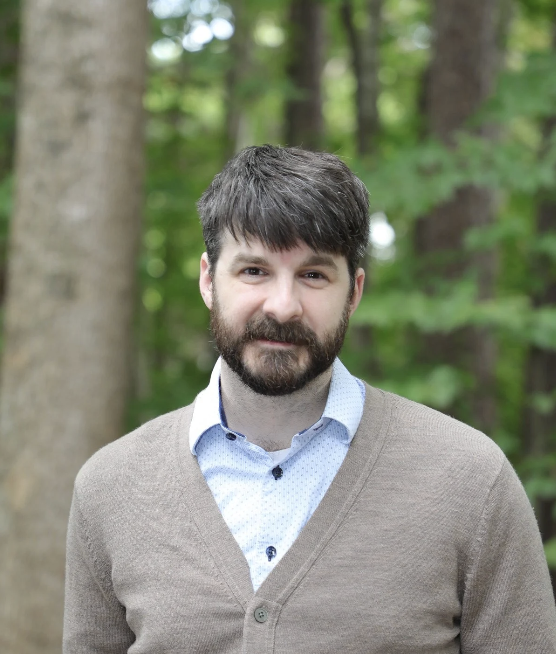
Ben is a licensed psychologist who works with adults encountering a variety of challenges in their lives, including anxiety, depression, relationship difficulties, OCD, history of trauma, addiction, and bipolar disorder. He is particularly interested in faith and spirituality as they arise during the course of therapy, and he also enjoys supporting others in the helping professions (therapists/counselors, social workers, doctors, nurses, pastors and priests, etc.).